
MoviPrep Cleansing Procedure for Colonoscopy


Movi Prep for Colonoscopy

PAUL E. SAVOCA, MD, FACS, FASCRS

PLEASE READ THE FOLLOWING INSTRUCTIONS CAREFULLY BEFORE YOUR PROCEDURE:
All PATIENTS MUST FOLLOW A CLEAR LIQUID DIET ONLY ALL DAY THE DAY PRIOR TO COLONOSCOPY.
DO NOT EAT OR DRINK ANYTHING OTHER THAN YOUR PREP AFTER MIDNIGHT THE NIGHT BEFORE

  • DO NOT eat foods containing seeds for five days prior to your procedure such as sesame or poppy seeds, strawberries, black pepper, corn or tomato skins. If by chance you have eaten these products, you should still proceed with your preparation.
  • Prescribed medications for heart disease, high blood pressure and asthma may be taken prior to your procedure, unless otherwise instructed. All other medications, including diabetic medications, should be brought along with you to be taken after your procedure.
  • DO NOT take aspirin or aspirin-type products such as Ibuprofen, Advil, Aleve, Nuprin, Motrin, Naprosyn, etc. for at least one week prior to procedure. Please do not take herbal remedies or supplements for at least one week prior to your exam. You may take Tylenol.
  • After your colonoscopy, if you had a biopsy or polyp removed: Please stop Plavix 7 days prior to your procedure, or Coumadin 4 days prior. Please consult the physician who prescribed the medication to make them aware.
  • Please advise the physician if you have a prosthetic heart valve, a serious heart murmur, or if you have had any cardiac procedures in the last year.
  • On the day of your colonoscopy you will receive intravenous sedation. These medications will impair your driving ability. You must arrange for someone to take you home after your procedure. The driver must remain in the facility throughout your procedure and recovery. You may not drive until the next day.
  • You will receive written diet instructions after your colonoscopy.
  • This packet contains the Movi-prep. If you are unable to complete the prep, please call the Doctor’s office and speak with a staff member. After hours, the Physician on call will contact you.

Movi Prep for Colonoscopy
Patient Instructions – Split – Dose Regimen

The MoviPrep carton contains 4 pouched and a disposable container for mixing. You must complete the entire prep to ensure the most effective cleansing.
The evening before your colonoscopy beginning at: 6pm

Step 1: Mix First Dose

  • Empty 1 Pouch A and 1 Pouch B into the disposable container
  • Add lukewarm drinking water to the top line of the container and mix until dissolved. If preferred, mix solution ahead of time and refrigerate prior to drinking. The solution should be used within 24 hours.

Step 2: Drink First Dose

  • The MoviPrep container is divided by 4 marks. Every 15 minutes, drink the solution down to the next mark (approximately 8 oz), until the full liter is consumed
  • Drink 16 oz of the clear liquid of your choice. This is a necessary step to ensure adequate hydration and an effective prep.

Step 3: Mix Second Dose

  • Empty 1 Pouch A and 1 Pouch B into the disposable container
  • Add lukewarm drinking water to the top line of the container and stir well If preferred, mix solution ahead of time and refrigerate prior to drinking. The reconstituted solution should be used within 24 hours.

Step 4: Drink the second dose the morning of your colonoscopy. You must COMPLETE drinking it four hours prior to leaving for your procedure.

  • The MoviPrep container is divided by 4 marks. Every 15 minutes, drink the solution down to the next mark (approximately 8 oz), until the full liter is consumed.
  • Do not drink or eat anything after completing the last does of your MoviPrep.

This colonoscopy prep causes the body to lose a significant amount of fluid and can result in dehydration. It’s important that you prepare your body by drinking extra clear liquids before the prep and remaining hydrated by drinking all required clear liquids during the prep. Also, replenish your system by drinking clear liquids after returning home from your colonoscopy.

If you have any questions, please call our office at 631-862-3600

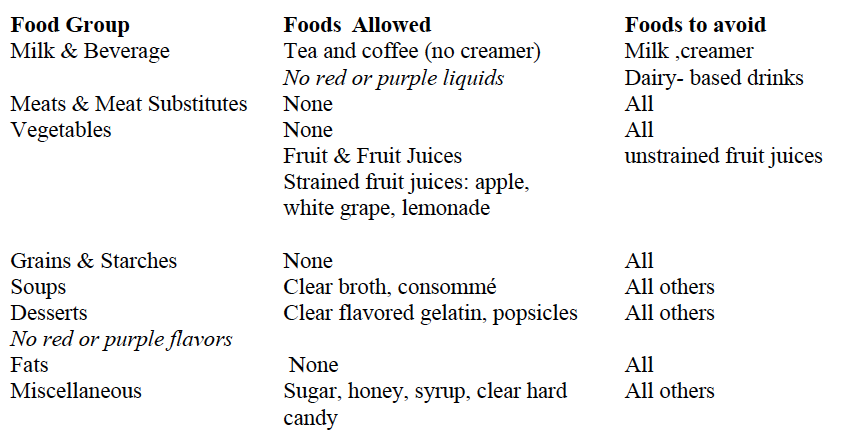
CLEAR LIQUID DIET

This diet provides fluids that leave little residue and are easily absorbed with minimal digestive activity. This diet is inadequate in all essential nutrients and is recommended only if clear liquids are temporarily needed.

No red or purple liquids should be consumed!

Miralax Cleansing Procedure for Colonoscopy

Download PDF

Miralax Bowel Prep for Colon Surgery

PAUL E. SAVOCA, MD, FACS, FASCRS

A bowel prep is done to clear the bowel of all solid matter. Its purpose is to cleanse the bowel for surgery or a procedure such as colonoscopy. Please follow these instructions exactly. Begin the bowel prep one day before your scheduled procedure. The cleansing is complete when the fluid passed is pale yellow without flecks of stool.

On the day prior to your surgery:
Drink clear liquids only for breakfast, lunch and dinner. NOTHING TO EAT OR DRINK AFTER MIDNIGHT (YOUR SURGERY MIGHT BE CANCELLED SHOULD THIS OCCUR)

  1. 1:00 PM Take 4 Dulcolax tablets with a drink of clear liquids.
  2. 2:00 PM Mix the Miralax in a 64-ounce bottle of Gatorade or other clear liquid of your choice. Cap the bottle and shake the bottle to dissolve the powder. Most people prefer to drink the liquid chilled so you may want to place it in the refrigerator.
  3. 4:00 PM Start to drink the Miralax. Drink one glass every 10 to 15 minutes. Drink it quickly rather than sipping small amounts because it does not taste that good. Finish drinking the liquid in 2 hours. Be sure to drink all of the liquid.
  4. Midnight Do not eat or drink anything after 12 midnight. You may gargle but do not swallow any liquid. Do not smoke after 12 midnight.

The morning of the surgery

  • Do not eat or drink anything until your test is done. If you are to take
    your morning medicines, take with small sips of water only.
  • Bring all medicines you usually take (in the original containers) to the
    hospital with you.
  • If you are to take your morning medicines, take with small sips of
    water.
  • Talk to your doctor or nurse if you have any questions or
    concerns.

Discharge Instructions For Colon Surgery

Download PDF

WHAT TO EXPECT AFTER YOUR COLON SURGERY

PAUL E. SAVOCA, MD, FACS, FASCRS

In-Hospital Care
After the operation the nursing staff will closely watch you until you have recovered from the anesthetic. You may even be cared for in the intensive care unit immediately following your surgery.

The recovery period after colon surgery varies. It usually involves a stay in the hospital from 3-7 days in uncomplicated cases. On return from your surgery you will have a catheter (plastic tube) in the bladder to measure and drain your urine.

After surgery you will be given intravenous fluids (a drip) through which antibiotics may be given. The drip will remain in place until you are able to drink enough fluids. It general requires 3-4 days before the colon has healed well enough to tolerate anything by mouth. You know the bowel has started to work again when you pass gas and/or have a bowel movement. You will then begin to take liquids by mouth and then solid food.

It is likely that on your return from surgery you will be wearing tight fitting stockings that are used to reduce the risk of blood clots forming in your legs. In addition, it is very important that you start moving as soon as possible. This helps to prevent blood clots forming in your legs and possibly going to your lungs. This can be fatal.

Also, you need to do your deep breathing exercises. Take ten deep breaths every hour to prevent secretions in the lungs from collecting. If this happens, you may develop pneumonia. At all costs, avoid smoking after surgery as this increases your risk of chest infection. Coughing is painful after abdominal surgery do not hesitate to use the pain medication provided.

Colostomy (“stoma” or “bag”)
Many patients undergoing colon surgery require a stoma. The colostomy or ileostomy drains bowel waste into an external bag attached to the abdomen. Most colostomy waste is softer and more liquid than normally passed bowel waste. The thickness of the bowel waste depends on where the stoma is. You will be taught how to clean around the colostomy and change the colostomy bag. The colostomy bag sticks to the skin around the stoma with special glue, and can be thrown away when dirty. This bag does not show under clothing, and most people learn to take care of these bags themselves. Stomas may be temporary or permanent, if reversible a second operation is always required.

Wound
Your wound will usually have no visible stitches or staples and is usually covered with a dressing. In certain cases staples or stitches are used to close the incision and will need to be removed at a later date.

Drains
You may also have a small tube that drains into a bag or a bottle from near your wound. This drain removes fluid from the surgical site and is usually removed within a few days after surgery at the bedside.

Pathology Report/Need for further treatment
Depending on the pathologist’s report, which is available 5- 7 days after the operation, further treatment may be required. These include:
Surgery- in rare circumstance an additional operation is required
Radiation Treatment- this been used for some people as the main treatment for rectal tumors but is not normally used in colon tumors. Radiation therapy is not as effective as surgery for patients who could normally be treated by bowel removal.
Chemotherapy (use of drugs to treat tumor) is usually used together with surgical removal and may not be offered as the only treatment”.

Postoperative Instructions (after Discharge)

  1. Soft diet for first week. Try eating six (6) small frequent meals rather than 3 big meals. Excessive sweets tend to make the stools more liquid. Add one new food at a time in small mounts. Drink plenty of fluids.
  2. Fiber: Avoid raw vegetables and raw fruits for 1-2 weeks. Gradually increase the fiber in your diet, as this will thicken the stool. Lessen the doses of Metamucil, Konsyl or Citrucel if abdominal cramps or bloating occur.
  3. Activity: Avoid activity which causes pain. Walking and climbing stairs OK. No lifting more than 20 lbs and no vigorous sports for 4-6 weeks or as directed.
  4. Resume home medications except: Aspirin or NSAIDS unless otherwise directed by the Doctor.
  5. No driving until seen in the office, riding in the car as a passenger is permitted.
  6. Common problems
    • Wound problems: It is okay to shower and get the incision and staples wet. Some drainage from the incision is common; a light gauze pad over the incision can be helpful. If drainage is cloudy or associated with fever > 101 degrees, call the office.
    • Medication reactions: Reactions to medicines can occur. The most common symptoms are nausea, vomiting, or itching related to taking the medication. If this occurs stop the medication and contact the office.
      *Note: All Narcotics cause constipation*
    • Urinary difficulties: Urinary tract infections occasionally occur following abdominal surgery. Pains with urination and/or blood in the urine are symptoms of infection. Bring these symptoms to the doctor’s attention at your post-op visit.
    • Bowel obstructions: abdominal cramps, bloating, nausea, vomiting, and constipation. When these develop, call your physician for advice. If the symptoms are mild, you may restrict intake to liquids only and avoid solid food. If the symptoms are severe or if persist beyond 24 hrs, call your physician.
    • Irritation around anus from severe diarrhea: Use Destin ointment or Skin protective paste. Avoid vigorous wiping after a bowel movement. Instead use a shower nozzle attachment to clean the area. A warm tub bath or sitz bath is also helpful. Pat gently dry afterwards. Baby wipes can be used instead of toilet paper.
    • Steroid withdrawal: If you had been on prednisone for a long time and have now stopped the medication, you are at risk for steroid withdrawal if the weaning is too rapid or if you are in a stressful situation. The manifestations may be vague with sever fatigue, nausea, fever/chills and joint aches being the most common. If there is no improvement within 24 hours, call your physician.
    • Infection: If you experience fever above 101 degrees, shaking, chills, lower abdominal discomforts, difficulty in passing urine and sometimes drainage of pus from wound, call your physician.
  7. Call the office on the day of your discharge to make follow up appointment in 1 to weeks (as directed at time of discharge).

On-call physician: To reach the doctor on call, dial the office number anytime day or night 631-862-3600.

The following is a brief list of the most common issues for which you should contact the physician:

  • Large amounts of bloody leakage from the wound.
  • Blood in the stool.
  • Fever and chills.
  • Pain that is not relieved by prescribed pain killers.
  • Tender, swollen abdomen.
  • Swelling, tenderness, redness at or around the incision
References for further study
The Surgical Clinics of North America Murray, John, J. (Ed), W. B. Saunders Company, Philadelphia, Volume 73, Number 1, February 1993,
Medical Oncology A Comprehensive Review, Pazdur, R. (Ed),
Huntington, New York, 1993.
Comparison of manually constructed and stapled anastomoses in colorectal surgery Docherty, J., McGregor, J., Arkyol, A., Murray, G. and Galloway, D
Annals of Surgery, 221: 76-184, 1995.
In-Hospital mortality and associated complications after bowel surgery
Ansari, M., Collopy, B., Hart, W., Carson, N., and Chandraraj, E
Australian and New Zealand Journal of Surgery, Vol. 70 pps 6-10, 2000. Antimicrobial prophylaxis in colorectal surgery: a systematic review of randomized controlled trials, Song, F., and Glenny, A.
British Journal of Surgery, Vol. 85, pps 1232 -1241, 1998.
Risk Factors for Morbiditand Mortalit After Colectomy for Colon Cancer,
Longo, W et.al. Dis Colon Rectum, Vol 43, No. 1., pps 83-91, January 2000
Post Colectomy Syndrome, World Journal of Surgery, Schoetz, D Vol. 15, pps 605 -608, 1991.
Bladder and Sexual Dsfunction after Surgery for Rectal Cancer, Kinn, A. and Ohman, U, Dis Colon Rectum., January 1996.
Effect of anterior resection on anal sphincter function, Horgan, P., O’Connell, P., Shankwii, C. and Kirwan, W., British Journal of Surgery, Vol. 76, pps 783-786, 1989.

Discharge Instructions For Stoma Reversal Surgery

Download PDF

POST SURGICAL INSTRUCTIONS FOR STOMA CLOSURES

  1. Dressing: Apply soft gauze over the old stoma site and change as needed. Showers or baths OK, remove dressing before. Pat gently dry afterwards. The wound usually closes completely in 8 weeks.
  2. Bowel function tends to be erratic up to 6 months after surgery; frequent bowel movements and seepage at night are common in the first few months. The body adapts and this improves gradually over the first year. When stabilized, the stool consistency is usually pasty to formed.
  3. Anti diarrheal medications:
    • Benefiber/Metamucil/Konsyl/Citrucel
    • Imodium (2mg) or Lomotil (2.5mg) by mouth, 30 minutes before meals and at bedtime as needed. (Maximum 8 a day of each)
    • As diarrhea improves, use Imodium or Lomotil less frequently.
    • Metamucil/Konsyl/Citrucel is free of major side effects and, though not essential, we advise its use.
  4. Possible problems:
    • Pouchitis: Abdominal cramps, low grade fever, urgency, blood in stool, aches and pain in muscles or joints, and sometimes nausea. The best treatment is Flagyl 250 mg by mouth, every 8 hours for 2 weeks. Call your physician if this is the first attack or if there is no improvement after 3 days of Flagyl in subsequent attacks.
    • Wound problems: It is okay to shower and get the incision staples wet. Some drainage from the incision is common; a light gauze pad over the incision can be helpful. If drainage is cloudy or associated with fever > 101 degrees, call the Doctor.
    • Urinary difficulties: Urinary tract infections occasionally occur following abdominal surgery. Pains with urination or blood in the urine are symptoms of infection. Bring these symptoms to the Doctors attention at your post. op visit.
    • Bowel obstructions: abdominal cramps, bloating, nausea, vomiting, and constipation. When these develop, call your physician for advice. If the symptoms are mild, you may restrict intake to liquids only and avoid solid food. If the symptoms are severe or if persist beyond 24 hrs, you must call your physician.
    • Irritation around anus from severe diarrhea: Use Desitin ointment or skin protective paste. Avoid vigorous wiping after a bowel movement. Instead use a shower nozzle attachment to clean the area. A warm tub bath or sitz bath is also helpful. Pat gently dry afterwards. Baby wipes can be used instead of toilet paper.
    • Steroid withdrawal: If you had been on Prednisone for a long time previously for ulcerative colitis and have now stopped the medication, you are at risk for steroid withdrawal if the weaning is too quick, or if you are undergoing a stressful situation. The manifestations may be vague with feelings of being rundown, giddy, nausea or severe joint aches. If there is no improvement within 24 hours, call your physician.
    • Infection: Fever, shaking, chills, lower abdominal discomfort,difficulty passing urine and sometimes drainage of pus from wound, call your physician.
  5. Call the office on the day of discharge to schedule a follow-up appointment for approximately 2 weeks.

Instructions For All Patients Undergoing Anorectal Surgery

Download PDF

PREOPERATIVE PREPARATION FOR ANORECTAL SURGERY

PAUL E. SAVOCA, MD, FACS, FASCRS

To diminish risk of bleeding please stop all aspirin; motrin; advil; coumadin; plavix; and all non prescription dietary supplements one (1) week prior to and after the procedure

1. The office may ask you to have blood tests done several days before your procedure. This is important to ensure that everything is optimal for your anesthetic. Occasionally, no blood testing is needed.
2. We ask that you do not eat or drink anything after midnight on the evening prior to your operation. Food or liquid in the stomach may cause problems with the anesthetic or force your surgery to be postponed.
3. We ask that you take two (2) Fleet’s enemas approximately 1 hour before you leave to go to the hospital on the morning of your procedure. This helps clear the rectal area of fecal material and allows for a safer and more comfortable operative procedure. Please read the instructions on the box prior to administering the enemas. Call the office if you have any questions.
4. There are several items available in any drug store which you may find helpful to obtain and have at home for use after surgery:

  • 4×4 gauze or other absorbent pads
  • Stool bulking agent (Benefiber, Metamucil, Fibercon, Citrucel, etc)
  • Stool softener (Colace, Surfak, etc)
  • Any medications for which you were given a prescription

5. Following these recommendations will facilitate the operative procedure and postoperative recovery.
6. Call the office if you have any questions or go to www.paulsavocamd.com

POSTOPERATIVE INSTRUCTIONS FOR PATIENTS UNDERGOING ANORECTAL SURGERY

1. The following prescriptions may be sent home with you:

  • Pain reliever with instructions.
  • Topical ointment (ie, Analpram, Anusol, etc) apply externally after each bath or bowel movement.
  • A cotton dressing may also be applied.
  • You should also purchase Benefiber or other psyllium product (Metamucil, Konsyl, Citrucel,etc.). Take 1 teaspoon twice a day in a large glass of water or juice. Decrease the amount if bloating or excess gas occurs.

2. Postoperative office visits are essential to monitor healing of your incision. Call the office to schedule your first appointment as instructed. This is generally 3 weeks following surgery.
3. Tub baths, comfortably warm, should be taken three times a day for 15 to 20 minutes especially after bowel movements.
4. Some bloody discharge, especially after bowel movements, can be expected. If there is prolonged or profuse bleeding with passage of clots, call the office at once. There may be gelfoam packing which will slough and dissolve on its own.
5. Bowel movements after rectal surgery are usually associated with some discomfort. This will improve as healing occurs. If you have not moved your bowels by the morning of the 4th day following surgery, take 2 Fleets enemas, 1 hour apart (lubricate well with Vaseline and insert gently). If no result, drink one bottle of citrate of magnesia. Following the first bowel movement, you should have a bowel movement at least every other day. If 2 days pass without a bowel movement, take an ounce of milk of magnesia, repeat in 6 hours if no result.
6. The use of dry toilet tissue should be avoided. After bowel movements, use wet Kleenex, cotton or Tuck’s pads to clean yourself, or if possible, take a warm tub bath.
7. A regular diet, including plenty of fresh fruit and vegetables, is recommended. Try to drink 6 to 8 glasses of water per day.
8. No strenuous exercise or heavy lifting should be attempted until healing is well underway. Climbing stairs, walking and car driving may be done in moderation. Car driving should be avoided for 7 days.
9. Call for temperature greater than 101 degrees.
10. If unable to urinate – try soaking in warm tub and urinate in the water. If still unable to urinate, call the office.

From the Clinical Staff to All Surgical Patients:
We are here to help you with any pre-operative and post operative questions you might have. We know this is new to you and any surgery can be frightening. We are here to help you through it. Please keep the following in mind when you call:
1 – Please leave a short message as to the nature of your call. Someone will usually get back with you as soon as possible. Remember if you are having a life threatening emergency, CALL 911.
If you call after 4 PM you will receive a call back shortly after the office opens at 9 AM.
2 – Please call the office where you are seen as that location will have your medical record which will make it much easier to answer any medical questions that you have.
3 – Medication refills: Please allow 48 hours for refills. Make sure you leave the following information:
YOUR NAME – WITH SPELLING
DATE OF BIRTH
YOUR BEST CONTACT TELEPHONE NUMBER
THE PHARMACY TELEPHONE NUMBER (VERIFY THAT IT IS OPEN) THE NAME OF THE MEDICATION FOR REFILL

Abscess/fistula Surgery Postop Instructions

Download PDF

DISCHARGE INSTRUCTIONS AFTER FISTULOTOMY

PAUL E. SAVOCA, MD, FACS, FASCRS

An anal fistula is an abnormal channel or tunnel-like chronic infection that starts inside the anus and ends outside on the skin around the anus. Its development is usually the result of a previous anal infection or abscess. About 50% of people with an anal abscess end up with a fistula. Most fistulas are short and superficial and are best treated by simply opening the entire tunnel and leaving it open to heal in gradually. Occasionally a patient can have a complex fistula with multiple tracts or the tunnel may traverse a considerable amount of the sphincter muscle. For this reason the surgical treatment has to be individualized for each particular patient depending on the location and anatomy of the fistula. Frequently, the surgeon cannot guarantee exactly what will need to be done until the examination that is done under anesthesia at the time of the surgery. It is important to realize that the operative procedure can change depending on what is found at the time of the surgery. At times a fistula will require more than one surgery to cure.

During a simple fistulotomy the tract is opened and left to heal. Sutures are sometimes used to narrow the wound but not close it completely. If it is decided that the fistula is too deep or in a bad position to open it completely, a small drain- called a seton – may be inserted. Your surgeon will explain how this will be managed in the future.

Discharge Instructions:
Following your fistulotomy, you may experience some mild to moderate pain or discomfort in your rectal area. You may also experience constipation, difficulty urinating, and possibly some rectal bleeding. The following are some general guidelines for proper care after your procedure.

Home Care:
A small amount of bleeding is common following rectal surgery. A sanitary napkin or gauze may be worn over the anal opening to keep the underclothing clean. When there is no longer any bleeding or discharge, there is no need to keep the pad in place. If there is prolonged or profuse bleeding with passage of clots, call the office at once.

Difficulty urinating after fistulotomy is unusual, but can occur due to spasm of the urinary sphincter resulting from pain due to the surgery. Getting the pain under control and relaxing the sphincter usually allows for the urine to pass. Take the pain medication you were prescribed and do warm sitz baths – either in a bath tub or sitz basin. While soaking, attempt to relax the bladder and urinate into the water. If you are unable to urinate in the first eight hours after your surgery, notify the doctor’s office. After hours, go to the nearest emergency room or urgent care center. A bladder catheter will be placed and remain in place for 2 days, you may call the office to have the catheter removed. Once you have started to urinate, drink plenty of water and fruit juices (such as prune juice) after your surgery.

You will be given a prescription for pain medication. Follow the directions given by your doctor for taking this medication. After a day or two, if the pain is subsiding try to use just plain Tylenol to ease residual discomfort. To avoid upset stomach, take your pain medication as prescribed with food in your stomach.

Take these drugs exactly as directed. Never take more than the recommended dose, and do not take the drugs more often than directed. If the drugs do not seem to be working, call the office for advice. Do not share these or any other prescription drugs with others because the drug may have a completely different effect on the person for whom it was not prescribed.

Some people experience drowsiness, dizziness, lightheadedness, or a false sense of well being after taking opioid analgesics. Anyone who takes these drugs should not drive, use machines, or do anything else that might be dangerous until they know how the drug affects them. Nausea and vomiting are common side effects, especially when first beginning to take the medicine. If these symptoms do not go away after the first few doses, check with the physician who prescribed the medicine. Side effects may include: dizziness, lightheadedness, nausea, sedation, vomiting, if these side effects occur, it may help if you lie down after taking the medication.

  • Avoid strenuous activity for 1 week after your procedure.
  • Take sitz baths (sit for 15-20 minutes in warm water) three times a day and after each bowel movement for the first few days.
  • If you were given a topical ointment, place this over the anal skin and a little into the anal canal 2-3 times a day.
  • Don’t worry if you have some bleeding, discharge, or itching during your recovery. This is normal.
  • Avoid constipation.
    • Take Benefiber or other psyllium product (Metamucil, Citrucel, Konsyl, etc) one teaspoon twice a day. Take a stool softener such as Colace or Surfak twice a day as well.
    • If you have not had a bowel movement by the morning of the fourth day following surgery, take 2 fleet enemas, 1 hour apart (lubricate the tip of the enema well with Vaseline and insert gently). If no result, drink one bottle of citrate of magnesium, which can be purchased at any pharmacy. Following the first bowel movement, you should have a bowel movement at least every other day. If 2 days pass without a bowel movement, take an ounce of milk of magnesia. Repeat in 6 hours if no result.
    • The use of dry toilet tissue should be avoided. After bowel movements use a wet Kleenex, cotton or Tuck’s pads to clean yourself, or if possible, take a warm bath.
    • If you were given a prescription for an ointment, apply this two or three times a day at the edge of the anal opening.
  • Eat a regular diet including plenty of fresh fruit and vegetables. Drink 6-8 glasses of water a day.
  • Call the office if your temperature is greater than 101 degrees.

Follow-Up
Make a follow-up appointment as directed by our staff. The first follow up is usually 3 weeks following surgery, but if a seton was placed the surgeon may want to see you sooner.

Hemorrhoid Surgery Postop Instructions

Download PDF

Discharge Instructions for Hemorrhoid Surgery

PAUL E. SAVOCA, MD, FACS, FASCRS

You had surgery to remove hemorrhoids (also called a hemorrhoidectomy). Hemorrhoids are swollen (enlarged, dilated) veins inside and outside the anus. Hemorrhoids are usually caused by increased pressure, such as straining when constipated or pressure during pregnancy. Hemorrhoids may cause pain, bleeding, blood clots, and itching. Complete recovery from hemorrhoid surgery typically takes about 4 weeks.

Following your hemorrhoidectomy, you will experience pain or discomfort in your rectal area. You may also experience constipation, difficulty urinating, and possibly some rectal bleeding. The following are some general guidelines for proper care after your procedure.

Home Care
A small amount of bleeding is common following rectal surgery. A sanitary napkin or gauze may be worn over the anal opening to keep the underclothing clean. If there is prolonged or profuse bleeding with passage of clots, call the office at once. In some patients a packing will have been placed in the anus at the end of the surgery. This will dissolve and pass with the first bowel movement.

Difficulty urinating after hemorrhoidectomy is usually due to spasm of the urinary sphincter resulting from pain due to the surgery. Getting the pain under control and relaxing the sphincter usually allows for the urine to pass. Take the pain medication you were prescribed and do warm sitz baths – either in a bath tub or sitz basin. While soaking, attempt to relax the bladder and urinate into the water. If you are unable to urinate in the first eight hours after your surgery, notify the doctor’s office. After hours, go to the nearest emergency room or urgent care center. A bladder catheter will be placed and remain in place for 2 days, you may call the office to have the catheter removed. Once you have started to urinate, drink plenty of water and fruit juices (such as prune juice) after your surgery.

You will be given a prescription for pain medication. Follow the directions given by your doctor for taking this medication. To avoid upset stomach, take your pain medication as prescribed with food in your stomach. Take these drugs exactly as directed. Never take more than the recommended dose. Some people experience drowsiness, dizziness, lightheadedness, or a false sense of well-being after taking these medications. Anyone who takes these drugs should not drive, use machines, or do anything else that might be dangerous until they know how the drug affects them. Nausea and vomiting are common side effects, especially when first beginning to take the medicine. If these symptoms do not go away after the first few doses, check with the physician who prescribed the medicine. Side effects may include: dizziness, lightheadedness, nausea, sedation, vomiting, if these side effects occur, it may help if you lie down after taking the medication.

  • Avoid strenuous activity for 1-2 weeks after your procedure.
  • Ask someone to drive you to appointments until you are able to sit and move comfortably.
  • Take sitz baths (sit for 15-20 minutes in warm water) at least 3 times a day and after each bowel movement.
  • Don’t worry if you have some bleeding, discharge, or itching during your recovery. This is normal.
  • Avoid constipation.
    • Take Benefiber or other psyllium product (Metamucil, Citrucel, Konsyl, etc) one teaspoon twice a day. Take a stool softener such as Colace or Surfak twice a day as well.
    • If you have not had a bowel movement by the morning of the fourth day following surgery, take 2 fleet enemas, 1 hour apart (lubricate the tip of the enema well with Vaseline and insert gently). If no result, drink one bottle of citrate of magnesium, which can be purchased at any pharmacy. Following the first bowel movement, you should have a bowel movement at least every other day. If 2 days pass without a bowel movement, take an ounce of milk of magnesia. Repeat in 6 hours if no result.
    • The use of dry toilet tissue should be avoided. After bowel movements use a wet Kleenex, cotton or Tuck’s pads to clean yourself, or if possible, take a warm bath.
  • Eat a regular diet including plenty of fresh fruit and vegetables. Drink 6-8 glasses of water a day.
  • Call the office if your temperature is greater than 101 degrees.

Follow-Up
Make a follow-up appointment as directed by our staff. The first follow up is usually 3 weeks following surgery.

Fissure Surgery Postop Instructions

Download PDF

SPHINCTEROTOMY (Anal Fissure Repair) DISCHARGE INSTRUCTIONS

PAUL E. SAVOCA, MD, FACS, FASCRS

A sphincterotomy is a procedure performed to treat anal fissures. An anal fissure is a split in the lining of the anal canal, possibly resulting from a hard bowel movement. Muscle spasms and subsequent bowel movements prevent healing.

During a sphincterotomy, the outermost part of the internal anal sphincter is cut. This breaks the muscle spasm, improving blood flow to the area of the fissure, resulting in relief of pain and healing of the fissure.

Discharge instructions

Following your sphincterotomy, you may experience some mild to moderate pain or discomfort in your rectal area. You may also experience constipation, difficulty urinating, and possibly some rectal bleeding. The following are some general guidelines for proper care after your procedure.

Home Care

A small amount of bleeding is common following rectal surgery. A sanitary napkin or gauze may be worn over the anal opening to keep the underclothing clean. When there is no longer any bleeding or discharge, there is no need to keep the pad in place. If there is prolonged or profuse bleeding with passage of clots, call the office at once.

Difficulty urinating after sphincterotomy is unusual but can occur due to spasm of the urinary sphincter resulting from pain due to the surgery. Getting the pain under control and relaxing the sphincter usually allows for the urine to pass. Take the pain medication you were prescribed and do warm sitz baths – either in a bath tub or sitz basin. While soaking, attempt to relax the bladder and urinate into the water. If you are unable to urinate in the first eight hours after your surgery, notify the doctor’s office. After hours, go to the nearest emergency room or urgent care center. A bladder catheter will be placed and remain in place for 2 days, you may call the office to have the catheter removed. Once you have started to urinate, drink plenty of water and fruit juices (such as prune juice) after your surgery.

Some patients have less pain after the surgery than they had prior to the surgery, but this is difficult to predict. You will be given a prescription for pain medication. Follow the directions given by your doctor for taking this medication. After a day or two, if the pain is subsiding try to use just plain Tylenol to ease residual discomfort. To avoid upset stomach, take your pain medication as prescribed with food in your stomach.

Take these drugs exactly as directed. Never take more than the recommended dose, and do not take the drugs more often than directed. If the drugs do not seem to be working, call the office for advice. Do not share these or any other prescription drugs with others because the drug may have a completely different effect on the person for whom it was not prescribed.

Some people experience drowsiness, dizziness, lightheadedness, or a false sense of well-being after taking opioid analgesics. Anyone who takes these drugs should not drive, use machines, or do anything else that might be dangerous until they know how the drug affects them. Nausea and vomiting are common side effects, especially when first beginning to take the medicine. If these symptoms do not go away after the first few doses, check with the physician who prescribed the medicine. Side effects may include: dizziness, lightheadedness, nausea, sedation, vomiting, if these side effects occur, it may help if you lie down after taking the medication.

  • Avoid strenuous activity for 1 week after your procedure.
  • Take sitz baths (sit for 15-20 minutes in warm water) three times a day and after each bowel movement for the first few days.
  • Don’t worry if you have some bleeding, discharge, or itching during your recovery. This is normal.
  • Avoid constipation.
    • Take Benefiber or other psyllium product (Metamucil, Citrucel, Konsyl, etc) one teaspoon twice a day. Take a stool softener such as Colace or Surfak twice a day as well.
    • If you have not had a bowel movement by the morning of the fourth day following surgery, take 2 fleet enemas, 1 hour apart (lubricate the tip of the enema well with Vaseline and insert gently). If no result, drink one bottle of citrate of magnesium, which can be purchased at any pharmacy. Following the first bowel movement, you should have a bowel movement at least every other day. If 2 days pass without a bowel movement, take an ounce of milk of magnesia. Repeat in 6 hours if no result.
    • The use of dry toilet tissue should be avoided. After bowel movements use a wet Kleenex, cotton or Tuck’s pads to clean yourself, or if possible, take a warm bath.
    • If you were given a prescription for an ointment, apply this two or three times a day at the edge of the anal opening.
  • Eat a regular diet including plenty of fresh fruit and vegetables. Drink 6-8 glasses of water a day.
  • Call the office if your temperature is greater than 101 degrees.
  • Follow-Up Appointment a follow-up appointment as directed by our staff. The first follow up is usually 3 weeks following surgery.

Pilonidal Surgery Postop Instructions

Download PDF

Discharge Instructions for Pilonidal Cystectomy

PAUL E. SAVOCA, MD, FACS, FASCRS

You have had a pilonidal cyst removed. Depending on the surgeon’s preference, the incision may be down the middle of the buttock crease or off to the side an inch or so. There may be some stitches placed as well. In most cases the majority of the wound is left open to heal in gradually. Caring for this open wound properly is essential for wound healing and to decrease recurrence of the cyst. Because of the difficulty seeing the wound, it is best to have assistance from a spouse, parent or sympathetic friend in changing the dressing.

  • You will be given a prescription for pain medication. Follow the directions given by your doctor for taking this medication. To avoid upset stomach, take your pain medication as prescribed with food in your stomach.
    Take these drugs exactly as directed. Never take more than the recommended dose, and do not take the drugs more often than directed. If the drugs do not seem to be working, consult your physician.
  • Do not share these or any other prescription drugs with others because the drug may have a completely different effect on the person for whom it was not prescribed. Some people experience drowsiness, dizziness, lightheadedness, or a false sense of well-being after taking prescription pain medications. Anyone who takes these drugs should not drive, use machines, or do anything else that might be dangerous until they know how the drug affects them. Nausea and vomiting are common side effects, especially when first beginning to take the medicine. If these symptoms do not go away after the first few doses, check with the physician who prescribed the medicine. Side effects may include: dizziness, lightheadedness, nausea, sedation, vomiting, if these side effects occur, it may help if you lie down after taking the medication.
  • Don’t drive while you are taking narcotic pain medication.
  • Don’t lift anything heavier than 15 pounds until your doctor says it’s okay.
  • Don’t mow the lawn, use a vacuum cleaner, or do other strenuous activities until your doctor says it’s okay.
  • You may walk indoors, outdoors, up and down stairs.
  • Expect to be off from work/school for at least one to two weeks following this surgery. Your surgeon will give you more guidance on return to normal activities.
  • Avoid constipation:
    • Eat fruits, vegetables, and whole grains.
    • Drink 6–8 glasses of water a day, unless otherwise instructed.
    • Use a fiber supplement and a stool softener twice a day. This is particularly true while taking narcotic pain medications.

Wound Care: For comfort take pain medication prior to dressing change.
The basic principle is to shower the wound twice a day and reinsert a fresh gauze in the wound after each shower.

  • Leave the dressing from surgery in place until the day after surgery.
  • The morning after surgery, remove the tape and outer dressing from the wound, getting in the shower and allow the rest of the dressing that is packed in the wound to be soaked with water and then pull it out. Unfortunately, this does hurt a bit.
  • When the dressing is removed, you may see a small amount of bleeding. This is normal.
  • Vigorously irrigate your wound in the shower for 5-10 minutes, using a hand-held shower head, it you have one. Aim showerhead directly at the wound. Bending forward helps open the wound. Let the water clean the area thoroughly.
  • Wrap a thin, clean wash cloth or 4×4 plain cotton gauze around your finger and clean gently, but thoroughly, the inner surface of the wound, removing any surface covering to expose clean, healthy pink tissue. Don’t scrub.
  • After shower, pat the skin around the wound edges dry.
  • The repacking of the wound is what usually requires help from another person. Wash hands. You may use gloves, but this is not necessary.
  • Moisten a fresh 4×4 inch plain cotton gauze with tap water. Squeeze out excess water.(The dressing should be damp, not wet).
  • Pack the wound gently but not tightly with the moist gauze. Use a Q-tip or your finger to ensure that the gauze reaches the bottom of the wound and place it so that all inner wound surfaces are in contact with the moist gauze.
  • Cover with a dry outer dressing and secure with tape or elastic bandage.
  • Dispose of the old dressing in plastic trash bag with twist tie.
  • As your wound heals, it will close from the bottom and sides, and you will need less and less gauze to pack it.
  • Shave the skin at least 2 inches around the wound at least once weekly. Use adhesive tape to pick up loose hair.

Follow up appointments are essential to ensure the wound is healing normally. The doctor will tell you how soon they need to see you back for the first follow up appointment.
When to Call Your Doctor:

Call the office if you have any of the following:

  • Excessive Bleeding
  • Increasing pain
  • Increased redness or drainage of the incision
  • Fever 100.5°F, or higher

Anal Warts (Condyloma) Removal Postop Instructions

Download PDF

DISCHARGE INSTRUCTIONS AFTER REMOVAL OF CONDYLOMA

PAUL E. SAVOCA, MD, FACS, FASCRS

Anal warts, also known as condyloma, are growths found on the skin around the anus (rectal opening) and sometimes in the anal canal.

Anal warts are caused by the human papilloma virus, which is usually transmitted through sexual contact but not necessarily through anal intercourse. The same type of warts may occur on the penis, scrotum, vagina or labia. The time from exposure to the virus and growth of the warts is commonly from one to six months, but it can be longer. During that time the virus remains in the tissues but is inactive. There are many types of human papilloma virus; some cause warts on the hands and feet and others cause genital and anal warts.
When the warts are just on the outer skin they may be able to be treated with a variety of medications applied in the office or at home. However, once the warts extend into the anal canal they need to be removed surgically. In most cases, a single treatment will not cure anal warts. Close follow-up is critical because the virus may continue to be present and cause new anal warts to form. Even after there are no visible warts, the virus may remain in the tissue. Small warts that reappear are easily treated in the office. Follow-up visits are necessary even after there are no visible warts. Visits may be necessary for up to six months. There is a possibility of serious problems if the warts are left untreated. On rare occasions, these warts can become cancerous, so it is important to keep the follow-up appointments the doctor suggests.

During the operation you have undergone the warts have been removed and the underlying surface has been burned slightly to eradicate the virus in the area.

Home Care

  • A small amount of bleeding is common following rectal surgery. A sanitary napkin or gauze may be worn over the anal opening to keep the underclothing clean. If there is prolonged or profuse bleeding with passage of clots, call the office at once.
  • You will be given a prescription for pain medication. Follow the directions given by your doctor for taking this medication. To avoid upset stomach, take your pain medication as prescribed with food in your stomach.

Take these drugs exactly as directed. Never take more than the recommended dose, and do not take the drugs more often than directed. If the drugs do not seem to be working, call the office for advice. Do not share these or any other prescription drugs with others because the drug may have a completely different effect on the person for whom it was not prescribed.

Some people experience drowsiness, dizziness, lightheadedness, or a false sense of well-being after taking opioid analgesics. Anyone who takes these drugs should not drive, use machines, or do anything else that might be dangerous until they know how the drug affects them. Nausea and vomiting are common side effects, especially when first beginning to take the medicine. If these symptoms do not go away after the first few doses, check with the physician who prescribed the medicine. Side effects may include: dizziness, lightheadedness, nausea, sedation, vomiting, if these side effects occur, it may help if you lie down after taking the medication.

  • If you were given a topical ointment place a thin layer over the anal wounds after baths and bowel movements.
  • Avoid strenuous activity for 1-2 weeks after your procedure.
  • Ask someone to drive you to appointments until you are able to sit and move comfortably.
  • Take sitz baths (sit for 15-20 minutes in warm water) at least 3 times a day and after each bowel movement.
  • Don’t worry if you have some bleeding, discharge, or itching during your recovery. This is normal.
  • Avoid constipation.
    • Take Benefiber or other psyllium product (Metamucil, Citrucel, Konsyl, etc) one teaspoon twice a day. Take a stool softener such as Colace or Surfak twice a day as well.
    • If you have not had a bowel movement by the morning of the fourth day following surgery, take 2 fleet enemas, 1 hour apart (lubricate the tip of the enema well with Vaseline and insert gently). If no result, drink one bottle of citrate of magnesium, which can be purchased at any pharmacy. Following the first bowel movement, you should have a bowel movement at least every other day. If 2 days pass without a bowel movement, take an ounce of milk of magnesia. Repeat in 6 hours if no result.
    • The use of dry toilet tissue should be avoided. After bowel movements use a wet Kleenex, cotton or Tuck’s pads to clean yourself, or if possible, take a warm bath.
  • Eat a regular diet including plenty of fresh fruit and vegetables. Drink 6-8 glasses of water a day.
  • Call the office if your temperature is greater than 101 degrees.

Perineal (Trans-anal) Repair Of Rectal Prolapse

Download PDF

Discharge Instructions for Perineal Repair of Rectal Prolapse

PAUL E. SAVOCA, MD, FACS, FASCRS

You had surgery to remove a rectal prolapse through the anus (this is often referred to as a Delorme or Altmeier Procedure). Complete recovery from hemorrhoid surgery typically takes about 4 weeks. Following your surgery, you will experience pain or discomfort in your rectal area. You may also experience constipation, difficulty urinating, and possibly some rectal bleeding. The following are some general guidelines for proper care after your procedure.

Home Care

  • A small amount of bleeding is common following rectal surgery. A sanitary napkin or gauze may be worn over the anal opening to keep the underclothing clean. If there is prolonged or profuse bleeding with passage of clots, call the office at once. In some patients a packing will have been placed in the anus at the end of the surgery. This will dissolve and pass with the first bowel movement.
  • Difficulty urinating after rectal surgery is usually due to spasm of the urinary sphincter resulting from pain due to the surgery. Getting the pain under control and relaxing the sphincter usually allows for the urine to pass. Take the pain medication you were prescribed and do warm sitz baths – either in a bath tub or sitz basin. While soaking, attempt to relax the bladder and urinate into the water. If you are unable to urinate in the first eight hours after your surgery, notify the doctor’s office. After hours, go to the nearest emergency room or urgent care center. A bladder catheter will be placed and remain in place for 2 days, you may call the office to have the catheter removed. Once you have started to urinate, drink plenty of water and fruit juices (such as prune juice) after your surgery.
  • You will be given a prescription for pain medication. Follow the directions given by your doctor for taking this medication. To avoid upset stomach, take your pain medication as prescribed with food in your stomach. Take these drugs exactly as directed. Never take more than the recommended dose, and do not take the drugs more often than directed. If the drugs do not seem to be working, call the office for advice. Do not share these or any other prescription drugs with others because the drug may have a completely different effect on the person for whom it was not prescribed.

Abscess Drainage

Download PDF

Discharge Instructions Following Drainage of Perirectal Abscess

An abscess around the anus develops as a result of an infection in glands within the anal canal. Although this infection usually does not become serious, occasionally it may reach the deeper tissues surrounding the anus. This results in the formation of a painful collection of fluid and pus. An incision and drainage of the infected fluid can relieve this pain. The wound that is made is left open to allow any residual pus to drain. Sometimes a dressing is placed in the wound as well.

Following the drainage of an abscess, there is approximately a 50-50 chance for the further development of a fistula. A fistula is a tunnel beneath the skin that starts at the gland which caused the infection and runs to the area of the abscess and then out onto the anal skin. This causes persistent drainage. A fistula may result in the development of further abscesses in the future. It is therefore imperative that patients follow up with their surgeon following drainage of their abscess.

HOME CARE:

A dressing has been placed over the wound. This should be left in place until you take your first tub bath (sitz bath). This may be in the evening or next morning following your surgery. Your surgeon will tell you the timing. At whichever time you are directed, the outer dressing should be removed. There is usually a dressing in the wound and this should be soaked and then pulled out while sitting in a tub of very warm water. You should then continue to take sitz baths with warm water three times a day for 10-15 minutes.

Your wound may continue to drain a large amount over the next several days as the infection slowly heals. Wear a gauze dressing to the wound to protect your clothing. You may also use a sanitary napkin for further protection of your clothing. You may notice bloody discharge for the next four to seven days.

Patients have much less pain after the surgery than they had prior to the surgery. However, depending on the size of the abscess there may be residual discomfort for a few days. Pain should slowly decrease. After a few days if there is a change in course and pain begins to intensify call the office. You will be given a prescription for pain medication. Follow the directions given by your doctor for taking this medication. After a day or two, if the pain is subsiding try to use just plain Tylenol to ease residual discomfort. To avoid upset stomach, take your pain medication as prescribed with food in your stomach.

Take these drugs exactly as directed. Never take more than the recommended dose, and do not take the drugs more often than directed. If the drugs do not seem to be working, call the office for advice. Do not share these or any other prescription drugs with others because the drug may have a completely different effect on the person for whom it was not prescribed.

Some people experience drowsiness, dizziness, lightheadedness, or a false sense of well-being after taking opioid analgesics. Anyone who takes these drugs should not drive, use machines, or do anything else that might be dangerous until they know how the drug affects them. Nausea and vomiting are common side effects, especially when first beginning to take the medicine. If these symptoms do not go away after the first few doses, check with the physician who prescribed the medicine.

Side effects may include: dizziness, lightheadedness, nausea, sedation, vomiting, if these side effects occur, it may help if you lie down after taking the medication.

  • Avoid strenuous activity for 1 week after your procedure.
  • Take sitz baths (sit for 15-20 minutes in warm water) three times a day and after each bowel movement for the first few days.
  • Don’t worry if you have some bleeding, discharge, or itching during your recovery. This is normal.
  • Avoid constipation.
    • Take Benefiber or other psyllium product (Metamucil, Citrucel, Konsyl, etc) one teaspoon twice a day. Take a stool softener such as Colace or Surfak twice a day as well.
    • If you have not had a bowel movement by the morning of the fourth day following surgery, take 2 fleet enemas, 1 hour apart (lubricate the tip of the enema well with Vaseline and insert gently). If no result, drink one bottle of citrate of magnesium, which can be purchased at any pharmacy. Following the first bowel movement, you should have a bowel movement at least every other day. If 2 days pass without a bowel movement, take an ounce of milk of magnesia. Repeat in 6 hours if no result.
    • The use of dry toilet tissue should be avoided. After bowel movements use a wet Kleenex, cotton or Tuck’s pads to clean yourself, or if possible, take a warm bath.
    • If you were given a prescription for an ointment, apply this two or three times a day at the edge of the anal opening.
  • Eat a regular diet including plenty of fresh fruit and vegetables. Drink 6-8 glasses of water a day.
  • Call the office if your temperature is greater than 101 degrees. Follow-Up Make a follow-up appointment as directed by our staff. The first follow up is usually 2 weeks following surgery.

From the Clinical Staff to All Surgical Patients:

We are here to help you with any pre-operative and post operative questions you might have. We know this is new to you and any surgery can be frightening. We are here to help you through it.

Please keep the following in mind when you call:

  1. Please leave a short message as to the nature of your call. Someone will usually get back with you as soon as possible. Remember if you are having a life threatening emergency, CALL 911. If you call after 4 PM you will receive a call back shortly after the office opens at 9 AM.
  2. Please call the office where you are seen as that location will have your medical record which will make it much easier to answer any medical questions that you have.
  3. Medication refills: Please allow 48 hours for refills. Make sure you leave the following information:
    • YOUR NAME – WITH SPELLING DATE OF BIRTH YOUR BEST CONTACT TELEPHONE NUMBER THE PHARMACY TELEPHONE NUMBER (VERIFY THAT IT IS OPEN) THE NAME OF THE MEDICATION FOR REFILL

Thrombosed Hemorrhoid Removal

Download PDF

Instructions Following Removal of Thrombosed External Hemorrhoids or Anal Skin Tags

1. A thrombosed hemorrhoid is the rupture of a varicose vein on the outside of the anus with accumulation of blood beneath the skin. What has been done today is removal of the clot and the skin over it in order to drain it and prevent recurrence.
2. A simple dressing has been placed over the wound. Remove it after arriving home just prior to soaking in a warm bath.
3. No strenuous exercise should be performed for the next 24-48 hours to prevent bleeding
4. There will be pain when the local anesthetic wears off. Tylenol, anesthetic ointment and warm tub baths will usually treat this. If they do not, fill the prescription you were given.
5. It will take approximately 10-14 days for the skin to heal. Do not be alarmed if minor bleeding discharge or itching occurs, this is normal.
6. Eat a fiber rich diet and drink 6 to 8 glasses of water every day to avoid constipation. You may also use a bulking agent such as metamucil if desired.
7. Anal hygiene is important. Wash or sit in the tub after bowel movements and gently cleanse the area with a wet wipe or moistened cotton. Anesthetic ointment or vaseline may be applied after bowel movements if desired.

CONTACT THE OFFICE IF:

  • You have pain that is not controlled with your prescription.
  • You are unable to urinate
  • You have continuous bleeding with passage of clots.
  • You have temperature above 101° F

Hemorrhoid Banding

Download PDF

Hemorrhoid Banding

  1. Hemorrhoids
    These are veins in the anus and lower rectum that become enlarged. The most common symptoms are rectal bleeding, itching, and sometimes pain. Hemorrhoids might come out with straining or having a bowel movement, and they can sometimes be pushed back in. There are internal and external hemorrhoids. Only internal hemorrhoids can be treated with banding. In this procedure, a rubber band is placed around the hemorrhoid tissue, strangulating the hemorrhoid which then falls off.
  2. After Each Treatment
    You may feel a dull ache for 36-48 hours following your treatment. The feeling may be noted as soon as the band is applied. The band may make you feel as if you need to have a bowel movement. Try not to move you bowels for two hours after the procedure to avoid pushing the band off the hemorrhoid. In 24-48 hours, the hemorrhoid caught in the rubber band will be completely destroyed. For discomfort, most people require tylenol, some require mild narcotics . Taking warm baths for 15-20 minutes will usually relieve the discomfort. If discomfort is severe or if there is fever of 101 degrees or more and there is difficulty urinating call the doctor immediately.
  3. Diet
    No special diet is necessary. It is important to keep your bowel movements soft and regular. Metamucil or similar fiber supplement should be taken once or twice a day. If necessary a stool softener can also be used.
  4. Activity
    You may continue your normal physical activities. You will be able to drive your car immediately after the treatment.
  5. Precautions
    The hemorrhoid will usually drop off within one week. You will usually not know this except occasionally some bleeding will occur at this time. Call the office should continuous bleeding with passage of clots should occur. It is important to remember that 2-4 treatments are usually required and that bleeding and protrusion can persist until all hemorrhoids have been treated. Swelling of the external skin can sometimes occur after the procedure, warm baths and hydrocortisone ointment can help this. If the swelling persists and the pain is intense, call the office.
  6. Follow-Up Treatment
    Generally, 2-4 treatments are required to eradicate all internal hemorrhoids. One treatment only is given at a time to minimize pain and complications.
  • SEEK IMMEDIATE MEDICAL CARE IF
  • There is intense pain with inability to urinate
  • Fever greater than 100.5°F (38.1 ° C).
  • Bleeding that does not stop

Infrared Hemorrhoid Treatment

Download PDF

After Procedure Instructions

This method of hemorrhoid treatment is the application of heat to the tissue surrounding the hemorrhoid veins causing coagulation or clotting of these veins and reduction in the swelling of these tissues.
After the treatment

Some mild discomfort may be experienced after the procedure. It should resolve within 48 hours. Usually no pain medication is required but if necessary warm baths and/or plain tylenol will suffice. If the pain is severe or associated with fever of 101 degrees or more, contact the office.

Some mild bleeding may be experienced for several days following the procedure. Avoid aspirin, ibuprofen, coumadin, plavix or other blood thinners or vitamins and supplements such as vitamin E. If continuous bleeding or passage of clots occurs, Go to the nearest emergency room immediately.

Avoid strenuous activity for 24-48 hours after treatment

Infection after IRC is rare but if sever pain and fever occur, contact the office

Eating a high fiber diet and plenty of fluids will avoid constipation which can increase pain after the procedure.

IRC is an effective treatment of hemorrhoids but commonly multiple applications are required during follow-up visits to eradicate the bleeding.

Pruritis Ani (anal itching) Treatment

Download PDF

Anal Pruritis

Anal pruritis (itching) is often due to increased moisture of the skin around the anus. This results in itching and scratching. This causes further skin damage. Hemorrhoids, infections, and other anal diseases may lead to itching. There may be no clear cause. Poor local hygiene will usually cause itching. Perfumed soaps and sprays can also lead to anal irritation. Dietary factors such as caffeine (coffee, black teas, colas), beer, milk products, chocolate, nuts, citrus fruits, tomatoes, spicy seasonings, jalapeno peppers and salsa may cause problems. In many cases no specific underlying cause can be identified.

The following is a list of DO’s and Don’t’s to help relieve anal itching

DO’s:
DO use plain white Kleenex or a moist cotton washcloth to wipe after bowel movements DO take warm tub baths 2-3 times daily especially after bowel movements
DO place several cotton balls gently between the buttocks to absorb excess moisture especially if ou perspire.
DO use bulk: 100% bran (up to 1/3 cup daily), whole grains or metamucil (1 teaspoon in a glass of water or juice twice daily). Decrease your fiber intake if you become bloated or have excess gas.
Do watch your diet and eliminate foods that seem to make the condition worse.
DO take medications as prescribed
DO wear all-cotton underwear
DO return to the office as scheduled

DON’TS
DON’T scratch or rub the anal area, wipe gently or pat dry.
DON’T use scented, colored or floral pattern toilet tissue
DON’T use harsh or scented soaps
DON’T use cleansing pads containing alcohol, avoid wet wipes in general
DON’T drink coffee, tea, alcoholic beverages or cola
DON’T eat spices, peppers, tomatoes or nuts. When your symptoms improve you may be able to resume eating some of these foods.

REMEMBER: Itching will not stop immediately,have patience

The following is a good barrier cream to be used at night in those suffering from pruritis

BUTT PASTE RECIPE
1 oz DESITIN OINTMENT
1 oz ZINC OXIDE OINTMENT
3 oz BETADINE OINTMENT
15 gm A&D OINTMENT
MIX TOGETHER IS A SEALED CONTAINER.

GOOD FOR 60 DAYS

Anal Fissure Treatment (non surgical)

Download PDF

Anal Fissure

An anal fissure often begins with sharp pain. This is usually following a bowel movement. It often causes bright red blood stained stools. It is the most common cause of rectal bleeding. One common cause of this is passage of a large, hard stool. It can also be caused by having frequent diarrheal stools. Anal fissures that occur for a longtime (chronic) may require surgery.

CAUSES

  • Passing large, hard stools.
  • Frequent diarrheal stools.
  • Constipation.

SYMPTOMS

  • Bright red, blood stained stools.
  • Rectal bleeding.

HOME CARE INSTRUCTIONS

  • If constipation is the cause of the rectal fissure, it may be necessary to add a bulk-forming laxative. A diet high in fruits, whole grains, and vegetables will also help.
  • Take warm sitz baths for 15 minutes 4 times per day may.
  • Increase your fluid intake.
  • Only take over-the-counter or prescription medicines for pain, discomfort, or fever as directed by your caregiver. Do not take aspirin as this may increase the tendency for bleeding.
  • Avoid constipating foods such as bananas and cheese.
  • Using medications prescribed by your physician results in healing in most cases within 4-6 weeks. If medical treatment is unsuccessful and/or pain is debilitating, outpatient surgery to be required.

SEEK MEDICAL CARE IF:

Rectal bleeding continues, changes in intensity, or becomes more severe.

MAKE SURE YOU:

  • Understand these instructions.
  • Will watch your condition.
  • Will get help right away if you are not doing well or get worse.

Pelvic Floor Testing

Download PDF

Patient Instructions for Anorectal Physiology (ARP) Testing

Preparation for the Procedure

ENEMA PREP

  1. We ask that you take two (2) Fleet’s enemas before you leave to go to the office on the day of your procedure. These are available in any pharmacy. You should use the Fleet’s saline enema in the green box or the generic equivalent not the oil enema in the orange box. This helps clear the rectal area of fecal material and allows for a safer and more comfortable procedure.
  2. Please take the first enema two (2) hours prior to leaving the house and the second enema one (1) hour prior to leaving the house. Please read the instructions on the box prior to administering the enemas for safe and correct use. If done incorrectly the procedure may need to be repeated and require repeating the prep.
  3. Call the office if you have any questions.

ARP testing consists of several tests some or all of which may be recommended by your physician depending on your symptoms.

Anal Manometry
Anal manometry is performed to evaluate patients with constipation and/or fecal incontinence. Anal manometry measures pressures of the anal sphincter muscles and the sensation in the rectum. The test takes approximately 30 minutes. A nurse will review the procedure with you, take a brief health history and answer any questions you may have. The person then lies on his left side. A small, flexible tube, about the size of a thermometer, is inserted into the rectum.. During the test the nurse asks the person to squeeze or relax the anal muscle. The anal sphincter muscle pressures are measured during each of these maneuvers. To squeeze, the person tightens the sphincter muscles as if trying to prevent anything from coming out. The doctor may perform two other tests. First, an anal EMG which is a test to evaluate the nerve supply to the anal muscle. In addition an ultrasound of the anal sphincter may be performed. After the examination, you may drive yourself home, eat and go about your normal activities.

Anal Sphincter EMG (Electromyography)
EMG measures the electrical activity in the pelvic floor (puborectalis) muscle. In constipated patients, an EMG is performed using postage stamp sized skin sensor applied near the anal opening. The patient relaxes squeezes and pushes. A computer records sphincter muscle electrical activity. Anal sphincter electromyography confirms the proper muscle contractions during squeeze and muscle relaxation during push. In people with non-relaxing puborectalis, the tracing of electrical activity gets bigger, instead of smaller, during a push. Normal anal EMG activity with low anal squeeze pressures on manometry may indicate a torn sphincter muscle that could be repaired.

In incontinent patients, the nerve that controls the sphincter muscle may have been damaged. In order to test for this, a fine sensor attached to the tip of the gloved examining finger of the physician is inserted into the anal canal. A gentle electrical impulse is delivered which most patients cannot feel. The time it takes for the muscle to respond is recorded and the procedure repeated on the other side.

Rectal Ultrasound
This painless exam involves inserting a small probe into the anal canal and using sound waves, a picture of the anal sphincter is generated. This reveals any potential abnormalities or injury in the muscle.

Risks:
Anorectal manometry is a safe, low risk procedure and is unlikely to cause any pain. Complications can occur, but are rare: it is possible that a perforation (tearing) or bleeding of the intestinal wall could occur. Equipment failure is extremely unlikely, but does remain a remote possibility.